Understanding EMSA Preventive Health and Safety Training in Roseville
Preventive Health and Safety training focuses on practices that help childcare professionals reduce avoidable health risks and maintain healthier environments for young children. The subject matter connects directly to daily responsibilities, including keeping shared spaces clean, handling food safely, recognizing potential environmental hazards, and following appropriate hygiene procedures.
In Roseville, this education may interest childcare employees, home-based providers, center administrators, and individuals preparing to enter early childhood education. Providers often need to balance children’s individual needs with consistent routines for meals, rest, play, and personal care.
The course can help learners understand why preventive measures matter and how they apply in childcare settings. For example, appropriate diapering procedures can reduce contamination, while regular cleaning of frequently touched surfaces supports a more hygienic environment. Food safety routines can also reduce preventable risks during meal preparation and snack time.
The appropriate course should be selected based on your current responsibilities and applicable California requirements, rather than assuming that every childcare position requires identical training.
How California Childcare Licensing Relates to Health and Safety Education
California’s childcare licensing system is administered by the California Department of Social Services (CDSS), including its Community Care Licensing Division. Licensing requirements and training obligations depend on the type of childcare operation and the responsibilities of the people working in it.
Family Child Care Homes and Child Care Centers operate under different licensing frameworks. A home-based provider may need to understand how preventive practices apply within a residential setting, while center staff may work with established procedures for classrooms, shared bathrooms, food preparation areas, and outdoor play spaces.
EMSA Preventive Health and Safety training is one part of the broader childcare health and safety education framework. It should not be confused with Pediatric CPR and First Aid, which address emergency response skills. Depending on the role and applicable rules, separate courses may be necessary.
Roseville childcare providers should confirm their specific requirements with the relevant Community Care Licensing office or employer. Reviewing current requirements before enrolling can help avoid completing a course that does not satisfy a particular training obligation.
Topics Covered in Childcare Preventive Health Practices
The Preventive Health and Safety curriculum addresses practical concerns that arise when caring for children in group and home-based settings. The California Childcare Health Program identifies infectious disease prevention, injury prevention, and nutrition as core modules in its eight-hour Preventive Health training curriculum.
For Roseville childcare professionals, these subjects connect to everyday decisions:
- Infectious disease prevention: Consistent handwashing, appropriate cleaning, and sound hygiene practices can help reduce the spread of illness among children and staff.
- Injury prevention: Recognizing environmental hazards, maintaining safe play areas, and using suitable supervision practices help reduce preventable injuries.
- Environmental sanitation: Clean kitchens, bathrooms, diapering areas, and frequently touched surfaces support a healthier childcare environment.
- Air quality: Appropriate ventilation, clean air filters, and avoiding exposure to tobacco smoke can contribute to healthier indoor spaces.
- Safe food practices: Clean preparation areas and appropriate food handling help reduce contamination risks during meals and snacks.
These practices matter in different ways across Roseville’s childcare settings. A Family Child Care Home may need to manage sanitation across shared household spaces, while a Child Care Center may coordinate procedures among multiple classrooms and staff members.
The exact topics and learning activities depend on the approved curriculum and course version. Check the provider’s current course description before enrolling.
Lead Poisoning Prevention for Roseville Childcare Providers
Lead exposure can harm children’s development, making prevention an important part of childcare health education. Young children may encounter lead through contaminated dust, soil, or deteriorating lead-based paint, particularly when they frequently touch surfaces and put their hands or objects in their mouths.
Childcare providers can reduce potential risks by maintaining clean environments, encouraging handwashing, and keeping children away from peeling paint or areas affected by unsafe renovation work. Outdoor play spaces should also be maintained appropriately, with suspected environmental hazards referred to qualified professionals.
California’s childcare health and safety framework includes lead exposure prevention in preventive health practices training for applicable licensed childcare settings.
For providers in Roseville and the wider Placer County area, the practical lesson is to recognize potential hazards and follow established procedures rather than assume an environment is safe based on appearance alone. If a provider suspects lead contamination, the appropriate response is to restrict access to the affected area and seek qualified guidance.
Nutrition and Individual Health Needs in Early Childhood
Children’s nutritional needs change as they grow. Childcare professionals may help plan age-appropriate meals and snacks, observe eating habits, and follow family-provided instructions for children with specific dietary needs.
The EMSA Preventive Health and Safety curriculum includes childhood nutrition. Relevant subjects include appropriate meal planning, specialized diets, food allergies, diabetes-related dietary considerations, feeding concerns, and the relationship between nutrition and dental health.
In a practical childcare setting, staff should know how to follow documented food allergy precautions, prevent food cross-contact, and communicate concerns to families. Children who have specialized diets or medical care plans may require specific arrangements established with their families and healthcare professionals.
Nutrition education also helps providers think about portion sizes, healthy eating habits, and suitable food choices for different developmental stages. These skills can support consistent care across Roseville’s home-based childcare operations and larger centers.
Where to Find EMSA Training Near Roseville
Roseville’s location in western Placer County makes it a relevant training destination for childcare professionals in nearby communities. People looking for EMSA training may also explore options from:
- Rocklin: Childcare providers and early childhood education workers in the neighboring city.
- Lincoln: Family Child Care Home operators and center staff serving communities north of Roseville.
- Loomis: Providers looking for training options within the surrounding Placer County area.
- Granite Bay: Childcare professionals serving residential communities east of Roseville.
- Citrus Heights: Individuals from the nearby Sacramento County community comparing local training options.
- Antelope: Childcare workers and prospective providers in the greater Sacramento region.
These communities have different travel considerations, so confirm the course location and registration arrangements before planning a visit. The purpose of a local training option is to help learners identify a practical place to explore the appropriate course, not to guarantee availability on a particular date.
Register for EMSA Preventive Health and Safety With Safety Training Seminars
Safety Training Seminars provides a Roseville location for people researching childcare health and safety education, alongside its broader CPR and First Aid training offerings.
Use the provider’s course listings to check the current EMSA Preventive Health and Safety offering and its registration requirements.
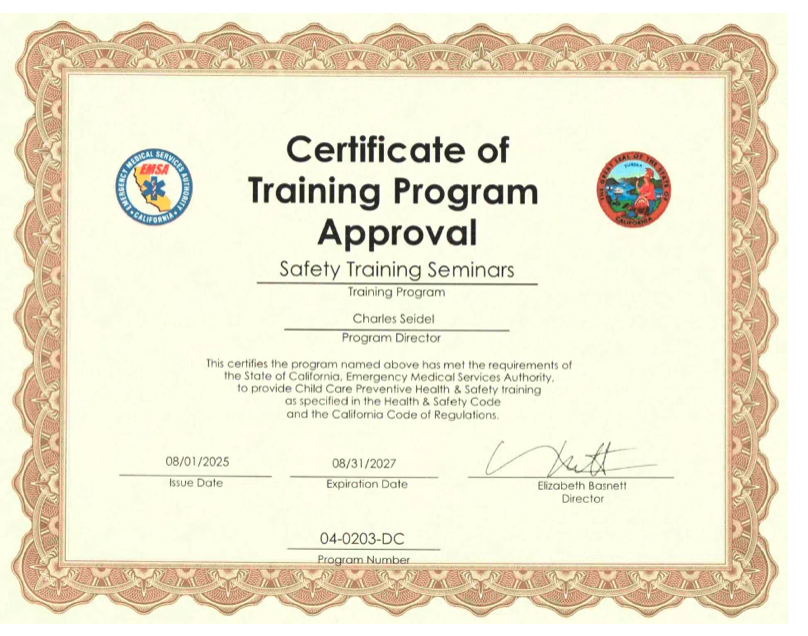
Before registering, confirm the course’s approval status, format, schedule, price, and completion documentation. These details should be checked directly because course arrangements can change.
It is also worth distinguishing EMSA Preventive Health and Safety training from Pediatric CPR and First Aid. Both relate to childcare safety, but they serve different learning purposes. A provider who needs to satisfy a particular licensing requirement should verify which course or combination of courses is applicable.